
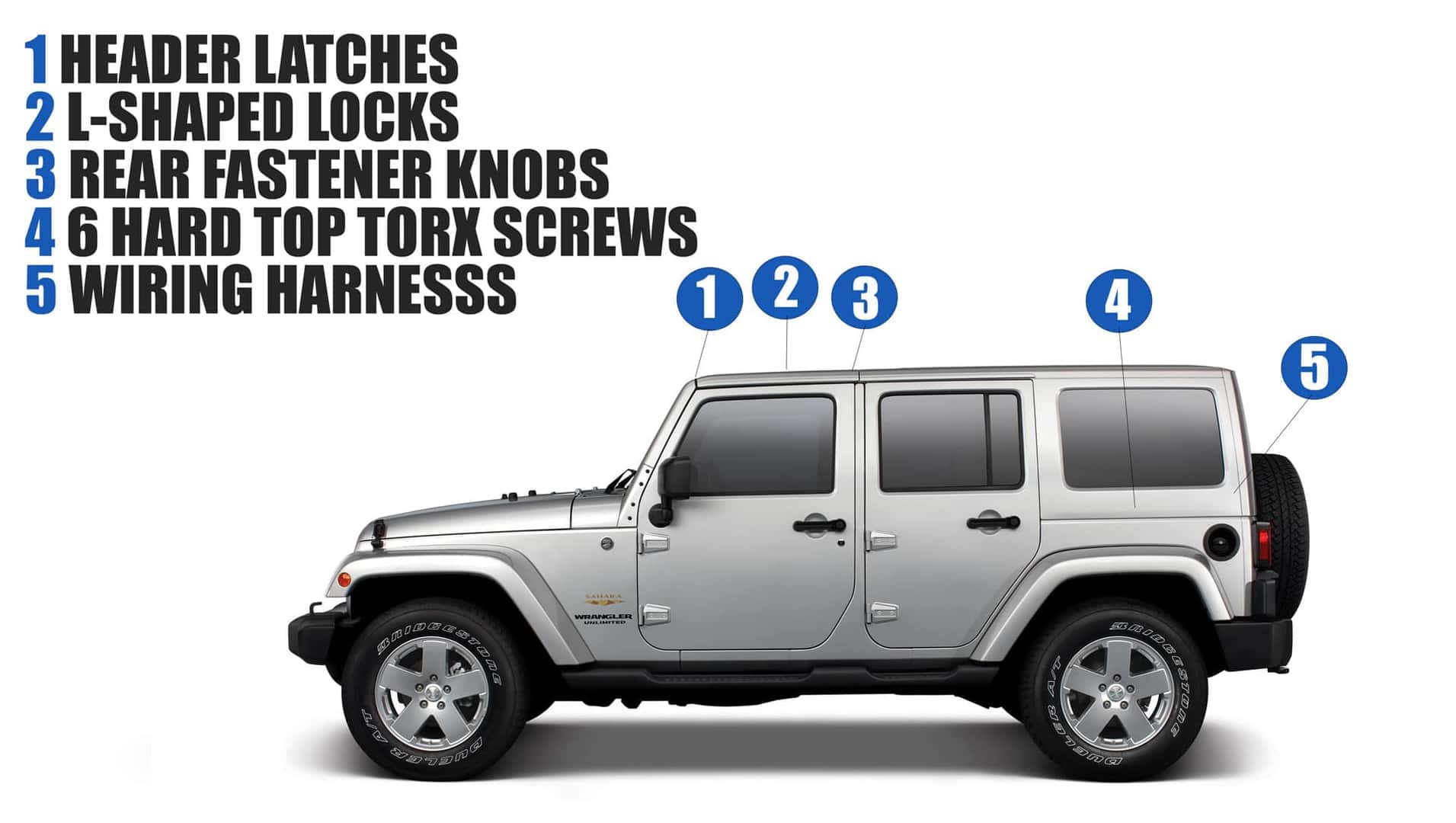
Image Source: di-uploads-development.dealerinspire.com
How to Remove Jeep Top: Step-by-Step for a DIY Jeep Wrangler Hardtop or Soft Top Removal
Yes, you can remove your Jeep top yourself! This guide will walk you through the process of removing either a Jeep Wrangler hardtop or soft top. We cover everything from preparing your vehicle to safely storing your top. This guide is useful for Jeep Wrangler hardtop removal, Jeep soft top removal, Jeep Gladiator top removal, 2-door Jeep top removal, 4-door Jeep top removal, DIY Jeep top removal, and specific models like the Jeep YJ top removal, Jeep TJ top removal, Jeep JK top removal, and Jeep JL top removal.
Taking the top off your Jeep is one of the most satisfying aspects of owning one. It transforms your Jeep from a closed-cab vehicle into an open-air adventure machine. Whether you have a classic Jeep YJ, a popular Jeep TJ, a rugged Jeep JK, the latest Jeep JL, or even a Jeep Gladiator, the process is largely similar, with a few model-specific nuances. This guide is designed to make your DIY Jeep top removal straightforward and safe.
Preparing for Top Removal
Before you start, gather the necessary tools and prepare your workspace. Having everything ready makes the job much easier.
Essential Tools:
- Socket Set or Wrenches: You’ll need specific sizes to remove bolts and screws. Check your Jeep’s manual or online forums for exact sizes.
- Torque Wrench: Important for correctly reinstalling bolts to prevent damage.
- Trim Removal Tools: Plastic tools are best to avoid scratching paint.
- Gloves: Protect your hands from sharp edges and dirt.
- Safety Glasses: Essential to protect your eyes from debris.
- A Friend or Partner: While some tops can be removed by one person, having a second person is highly recommended, especially for hardtops, for safety and ease.
- Blankets or Moving Pads: To protect the top when you set it down.
- Storage Solution: Decide where you will store the top safely.
Choosing the Right Location:
- Flat, Level Surface: Ensure your Jeep is parked on a stable, level area. This prevents it from rolling during the process.
- Adequate Space: You’ll need enough room around the Jeep to maneuver the top once it’s detached.
- Protection from Elements: If possible, work in a garage or under a covered area to protect yourself and the Jeep from sun, rain, or wind.
Removing a Jeep Wrangler Hardtop: A Detailed Guide
Jeep Wrangler hardtop removal can seem daunting, but it’s a manageable DIY project. The design has evolved over generations, but the core principles remain the same for Jeep Wrangler hardtop removal.
Jeep YJ and TJ Hardtop Removal (Similar Process)
The Jeep YJ (1987-1995) and Jeep TJ (1997-2006) hardtops are quite similar in their attachment points.
Step 1: Open All Doors
This gives you better access to the bolts and latches.
Step 2: Remove Freedom Panels (If Applicable)
Many TJ models and some YJ models have removable front panels, often called “freedom panels.”
* Locate the latches or screws at the front of these panels, typically near the windshield header.
* Unlatch or unscrew them.
* Carefully lift and remove the panels. They are usually lightweight and can be handled by one person. Store them safely.
Step 3: Locate and Remove Rear Hardtop Bolts
There are several bolts securing the hardtop to the Jeep’s body.
* Front Header Bolts: You’ll find bolts along the top of the windshield frame, often accessible from inside and outside.
* Behind the Doors: Check the area behind the driver and passenger doors, near the B-pillars. There are typically a few bolts here.
* Rear Tailgate Area: Look at the very rear of the hardtop, where it meets the Jeep’s body tub, often near the tailgate hinges or latches. There are usually two prominent bolts here.
* Side Bolts: On some models, there might be bolts securing the sides of the hardtop to the roll bar structure.
Step 4: Disconnect Wiring (If Applicable)
If your hardtop includes features like dome lights, rear defrosters, or rear wipers, you’ll need to disconnect the wiring harnesses. These are usually found near the rear of the hardtop.
Step 5: Release Rear Latches
Most hardtops have latches that secure the rear of the top to the Jeep’s body tub. Unlatch these.
Step 6: Lift and Remove the Hardtop
This is where a second person is invaluable.
* With all bolts removed and latches open, carefully lift the hardtop straight up.
* Important: The hardtop is heavy and awkward. Ensure you have a good grip. Avoid twisting or jerking.
* Lift it off the Jeep and set it down on your prepared blankets or pads.
Jeep JK Hardtop Removal (2007-2018)
The Jeep JK, both the 2-door Jeep top removal and the 4-door Jeep top removal, shares many similarities with the TJ but has some key differences.
Step 1: Open All Doors
Similar to other models, this provides access.
Step 2: Remove Freedom Panels
The JK also has removable front freedom panels.
* Locate the three latches at the front of each panel, along the windshield header.
* Flip these latches forward to release the panels.
* Lift and remove the panels.
Step 3: Locate and Remove Hardtop Bolts
* Front Header Bolts: You’ll find bolts on the windshield header, usually covered by plastic caps. Pry these off gently with a trim tool.
* Behind the Doors: Similar to the TJ, there are bolts behind the doors, connecting to the sport bar.
* Rearward Bolts: In the rear of the cabin, often near the top of the rear quarter panels or where the hardtop meets the body, you’ll find more bolts.
* Underneath the Roll Bar: Some JK hardtops have bolts that secure the sides to the roll bar structure, often accessed from beneath.
Step 4: Disconnect Wiring
Disconnect any wiring harnesses for lights, defrosters, or wipers.
Step 5: Release Rear Latches
The rear of the hardtop is secured by latches that need to be unhooked.
Step 6: Lift and Remove the Hardtop
* With all fasteners removed, the hardtop should be free.
* Crucially: The JK hardtop is quite heavy, especially the 4-door version. Two people are almost essential for safe removal.
* Lift straight up, ensuring no wires are snagged.
* Gently set the hardtop down on a protected surface.
Jeep JL Hardtop Removal (2018-Present)
The Jeep JL introduced a modular hardtop system, making removal a bit more adaptable. The Jeep JL top removal is similar but often easier due to lighter sections.
Step 1: Open All Doors
Standard practice for access.
Step 2: Remove Front Sections (Freedom Panels)
The JL has two separate front freedom panels.
* Locate the release levers or latches above each front door, on the interior of the Jeep.
* Push these levers forward to unlock the panels.
* Lift the panels up and out. They are relatively light and easy to manage.
Step 3: Remove Rear Hardtop Sections
The JL hardtop is typically in three main pieces: the two front panels and the rear section.
* Locate Rear Bolts: You’ll find bolts securing the rear section of the hardtop. These are often at the rear corners, where the top meets the body, and sometimes along the sides near the B-pillars or C-pillars.
* Disconnect Wiring: Unplug any wiring for dome lights or other features.
* Remove Rear Section: This is the heaviest part. Again, a second person is highly recommended. Carefully lift the rear section straight up and off the Jeep.
Step 4: Storage of JL Hardtop Sections
The modular nature of the JL hardtop means you can store the sections separately. This makes it easier to handle and store compared to a single, large piece.
Removing a Jeep Wrangler Soft Top
Jeep soft top removal is generally a simpler process than hardtop removal, often requiring no tools for basic convertible operation. However, if you’re removing the entire frame for storage or deep cleaning, there are a few more steps.
Standard Soft Top Operation (For Convertible Use):
This is what most people do when they want to go topless.
Step 1: Unzip Rear Windows
Most soft tops have zip-out rear windows. Carefully unzip them to allow for better airflow and easier folding.
Step 3: Release Front Latches
Locate the latches at the front of the soft top that secure it to the windshield frame. Release these.
Step 4: Fold the Top Back
* With the front latches released, push the soft top backward. It will fold down behind the rear seats.
* Secure the folded top with any provided straps to keep it in place.
Removing the Entire Soft Top and Frame (For Storage)
If you want to remove the entire soft top assembly, including the frame, for storage or to install a hardtop, follow these steps:
Step 1: Fully Lower the Soft Top
Follow the steps above to fold the soft top back as much as possible.
Step 2: Remove Side and Rear Window Sailcloth
* Most soft tops have sailcloth (the fabric) that is attached to the frame and the Jeep body with Velcro, straps, or snaps.
* Carefully detach the Velcro along the sides and rear.
* Unsnap any fasteners.
Step 3: Remove the Header Bar
The header bar is the metal piece at the top of the windshield frame that the soft top attaches to.
* It’s usually held in place by bolts or screws. Remove these.
Step 4: Disassemble the Frame
The soft top frame is often a collapsible structure.
* Identify pivot points and latches that allow the frame to be folded or taken apart.
* Carefully unbolt or unlatch sections of the frame to disassemble it.
* Be mindful of springs that might be under tension.
Step 5: Store the Soft Top and Frame
* Fold the fabric neatly and store it in a dry place, away from sunlight and moisture.
* Disassemble the frame and store the pieces securely.
Specific Notes for Different Jeep Generations:
- Jeep YJ Top Removal (Soft Top): YJ soft tops typically have a simpler frame structure. The process involves unzipping windows, releasing front latches, and often a few screws or bolts holding the frame to the tub.
- Jeep TJ Top Removal (Soft Top): TJ soft tops are similar to the JK but might have slightly different latching mechanisms. The frame is generally a multi-piece collapsible unit.
- Jeep JK Top Removal (Soft Top): JK soft tops feature a more integrated frame. Removing the entire assembly involves unzipping windows, releasing the header bar, and then detaching the frame from its mounting points on the body tub and roll bar.
- Jeep JL Top Removal (Soft Top): JL soft tops are designed for easier operation and removal. The frame often folds back cleanly, and detaching the entire unit involves releasing the header and side attachment points.
Jeep Gladiator Top Removal
The Jeep Gladiator JT shares a lot of its DNA with the Jeep JL. Therefore, Jeep Gladiator top removal for both hardtop and soft top versions follows very similar procedures to their Wrangler counterparts.
Hardtop Removal:
The Gladiator hardtop is essentially a stretched version of the JL hardtop.
* Open all doors.
* Remove the two front freedom panels as you would on a JL Wrangler.
* Locate and remove the bolts securing the rear section of the hardtop. These will be spread across a larger area than on the Wrangler. Pay attention to bolts at the rear of the bed, sides of the cab, and where the top meets the windshield frame.
* Disconnect any wiring harnesses.
* With two or more people, carefully lift the heavy Gladiator hardtop off the vehicle.
Soft Top Removal:
The Gladiator soft top also mirrors the JL design.
* For convertible use, unzip windows and fold the top back using the release latches.
* For complete removal, unlatch the header bar, detach sailcloth from Velcro and snaps, and disassemble the frame.
Storing Your Jeep Top
Proper storage is key to preserving your Jeep top, whether it’s a hardtop or soft top.
Hardtop Storage:
- Vertical Storage: Many owners opt for vertical storage racks designed for Jeep hardtops. These allow the top to stand on edge, taking up less floor space. Ensure the rack is stable and padded.
- Horizontal Storage: If storing horizontally, use a flat, protected surface. Avoid stacking heavy items on top of the hardtop.
- Protection: Cover the hardtop with a breathable cover to protect it from dust and scratches.
- Avoid Direct Sunlight: Prolonged exposure to UV rays can degrade the material and paint over time.
Soft Top Storage:
- Clean and Dry: Always ensure the soft top is clean and completely dry before storing it to prevent mold and mildew.
- Folding: Fold the fabric neatly, avoiding sharp creases in the windows, which can cause permanent damage.
- Storage Bag/Container: Use the original storage bag if you have it, or a suitable container that will protect it from dust, moisture, and pests.
- Climate-Controlled Environment: Store in a garage or shed, away from extreme temperatures and direct sunlight.
Reinstalling Your Jeep Top
The reinstallation process is essentially the reverse of removal. However, take extra care to ensure all bolts are tightened correctly, especially if you used a torque wrench during removal. Misaligned tops can cause leaks and wind noise.
Key Reinstallation Tips:
- Alignment: Carefully align the top with its mounting points. It might take some wiggling to get everything to seat correctly.
- Start Bolts by Hand: Thread all bolts by hand first to avoid cross-threading.
- Tighten in Stages: Gradually tighten bolts on opposite sides of the top to ensure even pressure.
- Torque Specs: If possible, consult your Jeep’s service manual for specific torque specifications for the hardtop bolts. This is especially important for preventing leaks and ensuring a secure fit.
- Wiring: Double-check that all wiring harnesses are securely connected.
- Sealant: For hardtops, inspect the seals around the edges and doors. If they appear worn, consider replacing them to prevent leaks.
Frequently Asked Questions (FAQ)
Q1: Can I remove my Jeep hardtop by myself?
A1: While it’s possible for some lighter hardtops and with a lot of effort, it’s strongly recommended to have at least one other person to help remove a Jeep hardtop. They are heavy and awkward to handle alone, increasing the risk of injury or damage to the top or your Jeep.
Q2: How long does it take to remove a Jeep top?
A2: For a DIY Jeep top removal, expect it to take anywhere from 30 minutes to 2 hours, depending on your experience, the type of top (hardtop or soft top), and how familiar you are with your specific Jeep model (Jeep YJ top removal, Jeep TJ top removal, Jeep JK top removal, Jeep JL top removal, Jeep Gladiator top removal).
Q3: What tools do I need for Jeep top removal?
A3: You’ll generally need a socket set or wrenches, possibly a trim removal tool for plastic caps, and gloves. For hardtops, a torque wrench is useful for reinstallation.
Q4: Will removing my Jeep top void my warranty?
A4: Typically, no. Removing and reinstalling your factory top is considered normal maintenance and operation. However, check your specific warranty documentation for details.
Q5: How do I prevent leaks after removing and reinstalling my top?
A5: Ensure all seals are properly seated and in good condition. Tighten bolts evenly and to the correct specifications. If you notice persistent leaks, you may need to replace worn seals or check for body damage.
Q6: Can I drive my Jeep without a top?
A6: Yes, Jeeps are designed to be driven with or without their tops. However, ensure all safety belts and roll bar structures are in place. Be aware of weather conditions and potential debris.
Q7: What’s the difference between 2-door and 4-door Jeep top removal?
A7: The main difference is the size and weight of the top. A 4-door Jeep top removal (like a JK or JL Unlimited) involves a larger, heavier hardtop than a 2-door Jeep top removal, making the need for a helper even more critical.
Q8: Are Jeep soft tops easier to remove than hardtops?
A8: Generally, yes. For basic “going topless” convertible operation, soft tops are much easier. Removing the entire soft top frame can be comparable in complexity to some lighter hardtop removal tasks, but hardtops are typically heavier and more rigid.
Embarking on your DIY Jeep top removal is a rite of passage for Jeep owners. By following these steps, you can confidently take on the task, whether you’re aiming for Jeep Wrangler hardtop removal, Jeep soft top removal, or any of the specific models. Enjoy the open-air experience your Jeep offers!